The Ultimate Guide to Wood Assembly Adhesives
You already know that the choice of wood assembly adhesive is important on a busy line if the clamps come off too soon and the joint moves before the glue sets. I wrote this guide after visiting factories in Guangdong, Shandong, and Jiangxi and seeing line leaders fight over open time, cold-weather cure, and formaldehyde audits all in the same week. How does wood assembly adhesive work? This guide tells you how to match it to the type of wood and joint and how to evaluate a supplier before placing a full drum order. There are also real production numbers from a solid wood furniture factory that cut down on rework after changing the way it sticks things together.
What Should Every Woodworker Know About Assembly Adhesives?
What Is Wood Assembly Adhesive?

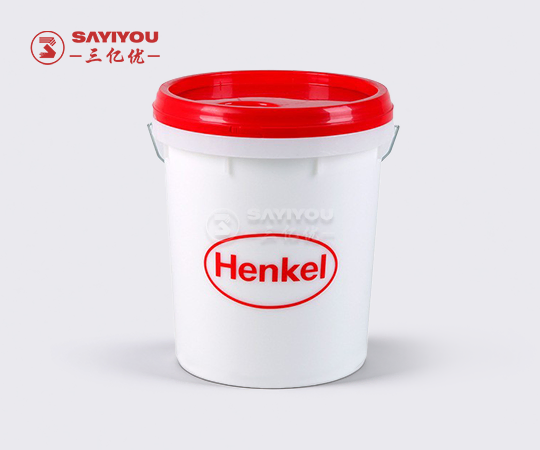
When making furniture, doors, windows, and panels, wood assembly adhesive is a bonding product used to join wood pieces. It includes solid wood, plywood, MDF, particleboard, veneer, laminated panels, and some plastics or metals that are mixed together to make other materials. In stores, the term "wood glue" is often used in a broad sense. But in the industrial world, "wood assembly adhesive" refers to specially engineered formulas that are made to meet specific targets for viscosity, open time, and strength. For example, a 20 kg drum of AQUENCE KL 3366 is made to work over and over again on thousands of joints, not just one weekend project.
How Does Wood Assembly Adhesive Work?
When the liquid glue spreads across the wood's surface and soaks into open pores, the bonding process begins. This makes a mechanical grip and a chemical bond as the polymer chains connect to the wood fibers. As the water in a water-based wood assembly adhesive evaporates and is absorbed by the wood, it makes the joint stronger. The clamp pressure keeps both surfaces together while the film forms. This is why the final bond quality is affected by both the clamp time and the spread rate.
Wood Assembly Adhesive Versus Wood Glue
Buyers often want to know what makes a production-grade system different from a wood glue from a hardware store. The differences I see in real life on factory floors are shown in the table below.
| Factor | General wood glue | Industrial wood assembly adhesive |
|---|---|---|
| Typical chemistry | PVA or similar water-based system | PVA, PUR, epoxy, or engineered hybrid systems |
| Main users | DIY and small workshops | Furniture, door, window, and OEM production lines |
| Packaging | Small bottles or cans | Pails, drums, or 20 kg barrels |
| Documentation | Basic instructions | TDS, SDS, batch records, and test reports |
| Process control | Manual spreading | Metered dispensing, roller coating, pressing control |
Because of this difference, a plant with two shifts needs more than just a bottle that says "strong bond" on the label. They also need to be able to track each batch and have a set range of viscosities.
How Do You Select Adhesive for Different Wood Types?
Adhesive Selection by Wood Species and Porosity
Pine, spruce, and poplar are porous softwoods that soak up wood assembly adhesive quickly. Because of this, they usually need a shorter open time and a slightly heavier spread rate. Hardwoods that are dense or oily, like teak and some tropical species, don't like getting wet because their natural oils block the glue line. In 2024, Sanyiyou polled 42 solid wood furniture plants in Guangdong, Shandong, and Jiangxi. Of those plants, 68% said that weak initial tack was their biggest adhesive complaint. Most of those plants worked with both hardwood and softwood frames in the same week. Before a production run, the only way to be sure of fit is to do a short trial bond on the real species, not a similar one.
Best Adhesive for Cabinets, Furniture, and Wood Joints
A lot of the time, I break this down by station instead of by "best" product because different stages of production need different priorities.
- Fast setting, clean machining after cure, and low squeeze-out are all important for cabinet production so that panel edges stay sharp without having to be sanded more. Compatibility with MDF and particleboard is important because these substrates absorb adhesive unevenly compared to solid wood.
- For indoor furniture assembly, the joints need to be strong between the wood pieces and have enough open time so that the worker can align the frames, legs, and rails before the glue sets. The joints also need to look good, as any visible glue line at a joint can fail inspection.
- When working with wood outside, the glue needs to be able to withstand rain, condensation, and changes in temperature throughout the year. A D2-rated glue is usually good for covered outdoor use, but if it will be exposed to water for a long time, a higher classification may be needed.
- Not only the strength of the glue, but also the design and fit of load-bearing joints like finger joints and mortise and tenon connections are important. According to ASTM D5751 (2011), the performance of finger-joint adhesives must be proven through defined tensile and shear tests, not just by looking at them.
Because of these factors, a furniture factory with 50 to 300 workers usually has more than one type of wood assembly adhesive on hand, to match joinery and panel work.
Flexible Versus Rigid Wood Assembly Adhesives
| Adhesive type | Strength profile | Flexibility | Typical applications |
|---|---|---|---|
| PVA | High on well-fitted wood joints | Low to moderate | Indoor furniture, cabinets, general assembly |
| Polyurethane | Strong and moisture-resistant | Moderate | Outdoor woodworking, mixed substrates |
| Epoxy | High gap-filling, substrate versatility | Depends on formula | Repairs, difficult joints, engineered parts |
| Hybrid/reactive systems | Application-specific | Moderate to high | Production lines, demanding environments |
Rigid systems, like PVA, keep their shape when they're loaded, but they can break if the wood moves around when the humidity changes. Some of that movement is absorbed by flexible systems, which helps on wide panels that have to expand and contract with the seasons.
What Preparation Steps Improve Bonding Results?
Surface Preparation for Strong Wood Joints
For a strong bond to form with wood assembly adhesive, the wood must be clean, dry, and flat. Skipping this step is the most common reason I see for joints failing. Even if the glue is right for the job, dust, oil, wax, and loose fibers can make it impossible to wet. The range of wood moisture content shown on the technical data sheet should be followed. This is because glue doesn't cure properly when the wood is too wet or too dry. Surfaces that are too smooth or burnished can make bonding worse because they leave less texture for mechanical grip.
Moisture Content, Joint Design, and Tolerances
When the humidity changes, wood moves, and a joint that can't handle it will eventually stress the glue line, no matter how strong the glue is. There are different ways that dowel joints, biscuit joints, finger joints, and mortise and tenon assemblies handle this movement, so the type of joint should determine the type of glue that is used. End grain soaks up more glue than face grain, so the first coat needs to be thicker or applied in two steps. If you use adhesive to fix a joint that is loose or poorly machined, it will almost always fail soon after.
Pre-Production Bond Trial
Before full production, a short test run saves a lot more time than it costs. This is especially true for new batches of wood or new joint designs. For every new job, I suggest this five-step plan.
- Not a different kind of wood or finish, but the exact species and finish that are planned for the run.
- Use the planned amount of glue and clamp pressure, which should match how the production will actually be set up.
- Cure the test pieces in the real shop temperature and humidity, even if it's cold in the morning.
- First look at the bond and then do a simple destructive pull or shear check on it.
- For future use, write down the batch number, test date, operator, and result.
Which Application Methods Deliver the Best Coverage?
Manual, Roller, Nozzle, and Automated Application
Brush and hand-spreader methods still work for wood assembly adhesive in shops that don't do a lot of work, but the spread rate can vary a lot from operator to operator. Roller coaters are good for sticking veneers together and bonding flat boards together because they spread the paint evenly over large panels. When precise placement is more important than full coverage, bead or nozzle application works best for joints, frames, and finger-joint lines. The most consistent output comes from automated metering systems. This is the main reason why larger OEM plants are moving away from manual glue pots.
Adhesive Coverage and Spread Rate
Spread rate for AQUENCE KL 3366 is usually in the range shown on its technical data sheet, with some changes made depending on whether adhesive is applied to one or both surfaces. When applying on one side, it works best for tight, well-fitted joints. When applying on two sides, it works better for end grain or finger joints that are porous. When the shop is warm and dry, the open time (the amount of time the adhesive can be used before it hardens) is shorter. When the shop is cool and humid, the open time is longer. Never check the line speed against the open time of the glue, but rather the other way around to avoid putting things together too quickly.
How to Control Application Quality
A quick look and touch at the glue station finds most quality issues before they get to the clamp.
- You should use a quick weight check to confirm the wet film thickness or spread rate, since guessing how much glue is covered by eye will give you different results across a shift.
- Look out for dry spots, skips, or a lot of pooling on the joint surface. These are all signs of worn-out equipment or mistakes made by the operator.
- Because cold glue thickens and spreads unevenly, make sure that the temperature and viscosity of the glue are within the range given on the data sheet.
- Instead of only when something goes wrong, calibrate the pumps, rollers, and scales on a set schedule.
These checks find the small change in wood assembly adhesive equipment that would show up three weeks later as weak bonds if it weren't caught.
How Much Clamping Time Does Each Adhesive Need?
Wood Assembly Adhesive Curing Time
People on the shop floor often get confused because they think that curing is just one moment when it's not. Open time tells you how long the glue can be used after it has been put down. How long parts can sit before being clamped is part of the assembly time. This is how long the pressure has to stay on before you can handle it. Many times, it takes longer for the joint to fully cure than for the clamp time to be over. These numbers change depending on the humidity, temperature, the amount of wood used, and the amount of glue that is used.
Case Study: Winter Cure Time at a Guangdong Furniture Plant
A solid wood furniture factory in Guangdong, with four assembly lines and about 180 workers, came to us with a problem that we see a lot in the winter. Below 12°C, their old PVA glue needed almost 40% more clamp time, and during the coldest weeks, almost one in six units had to be redone because the frame was unclamped too early. The plant's production manager said that within the first month, rework dropped to about one in thirty units after switching to AQUENCE KL 3366 and adjusting the clamp pressure to the new open time. The boss told us, "Our team didn't change the joint design at all." "We just matched the clamp time to what the data sheet said for our shop temperature." During the change, the plant kept daily records of production, which is something I always tell people to do when changing adhesives.

Fast-Curing Wood Assembly Adhesive Comparison
| Adhesive system | Typical curing mechanism | Production advantage | Main limitation |
|---|---|---|---|
| Fast PVA | Water evaporation and film formation | Short clamp time, easy cleanup | Sensitive to cold and high humidity |
| Polyurethane | Moisture-reactive chemical cure | Moisture resistance, substrate versatility | Foaming risk, needs careful moisture control |
| Epoxy | Two-component chemical reaction | Gap filling, high durability | Mixing step, slower handling in some formulas |
| Hybrid/reactive | Formula-specific | Can be fast and flexible | Needs supplier-specific validation |
Application Temperature and Line Conditions
An application temperature range, a storage temperature range, and a humidity range for wood assembly adhesive should all be on every data sheet. For AQUENCE KL 3366, the minimum clamp pressure and clamp duration are given along with a range of wood moisture levels. The glue line should not be machined or packaged until it reaches handling strength. One of the fastest ways to make an adhesive less reliable is to run a line below the minimum temperature that was given.
What Common Mistakes Weaken Wood Assembly Bonds?
Common Bonding Failures
Instead of a bad batch of glue, most bond failures are caused by a few things that happen over and over again. The most common one I hear from the field is putting glue on dusty, oily, or frozen wood. Either too little or too much glue will weaken the joint, but they do so in different ways. When you take off the clamp pressure too soon, leave the joint open for too long, or force a poorly fitted joint together, you stress the glue line before it has set. The last thing on the list is expired adhesive or contamination from mixed products.
Failure Symptoms and Likely Causes
| Symptom | Possible cause | Corrective action |
|---|---|---|
| Joint opens during handling | Insufficient clamp time or poor fit | Review pressure, alignment, and cure schedule |
| Weak surface bond | Contamination or low wetting | Improve cleaning and surface preparation |
| Excessive squeeze-out | Over-application or excessive pressure | Adjust spread rate and clamping force |
| Brittle or cracked bond | Mismatched flexibility for wood movement | Select a more suitable adhesive system |
| Foaming or expansion | Moisture-reactive chemistry, excess moisture | Control moisture, follow application instructions |
Troubleshooting and Corrective Action Records
By writing down the batch number and the date of production of your wood assembly adhesive, you can turn a one-time problem into a pattern that can be solved. It's easier to find the real cause when you separate the variables for the adhesive, substrate, equipment, and process. Include containment steps, results of retesting, and the next steps taken to keep this from happening in a proper record. When supplier technical support sees both the data sheet and your actual shop readings, they can often find a pattern more quickly.
How Do Environmental Conditions Affect Adhesive Performance?
Indoor Versus Outdoor Wood Assembly
For indoor furniture to look good, it needs to be well-made, have a low smell, and follow any formaldehyde or emissions rules that are in place. When working with wood outside, it needs to be able to withstand water, freeze-thaw cycles, and changes in temperature. The most important things for industrial production lines are stable viscosity, predictable open time, and results that are the same from batch to batch. Because one adhesive doesn't usually meet all three needs equally well, companies that sell to both the US and the EU often keep different grades on hand.
Waterproof and Water-Resistant Properties
The word "waterproof" isn't always used, so I always tell a supplier to proof it before they use it. According to EN 204 (2001) and EN 205 (2016), the different types of European wood adhesives are classified from D1 to D4, which range from fully submerged to light, occasional contact with water. AQUENCE KL 3366 is a D2-rated adhesive that works well on furniture, doors, and floors inside when the humidity is normal to moderate. However, it is not meant to be submerged in water for long periods of time. Just as much as the adhesive rating, joint design, edge sealing, and surface coating all have an effect on how well something resists water in the real world.
Environmental and Chemical Exposure
Changes in temperature, high humidity, and condensation all put slow stress on a glue line over time. Some adhesive films can become less strong when cleaned with oils and chemicals found in household items. This is especially important for kitchen cabinets and bathroom furniture. Formulas with zero free formaldehyde, like AQUENCE KL 3366, stop one common indoor air complaint. However, it is usually the finished piece of furniture that is tested for export compliance, not just the adhesive.
What Safety Practices Should Users Follow?
SDS-Based Handling and Workplace Controls
When someone is new to using a wood assembly adhesive, the first thing they should do is read the Safety Data Sheet (SDS). OSHA's Hazard Communication Standard (2024) says it should include first aid, fire safety, personal protective equipment, ventilation, skin and eye protection, and steps for dealing with spills and fires. Water-based systems, such as AQUENCE KL 3366, are safer than solvent-based systems when it comes to solvent vapors. However, on a busy glue line, basic ventilation and skin protection are still important.
Storage, Shelf Life, and Transportation
Water-based glues need to be protected from freezing because a barrel that has been frozen and thawed often comes apart and loses its ability to stick things together. To keep the surface from skinning over, containers should stay closed when they're not in use. When comparing batch expiration dates and shelf life, it's important to look at both the delivery date and the purchase date. This is especially important for seasonal buyers who don't buy much. Products that are reactive or contain solvents may have transport problems that a water-based system doesn't have to deal with.
Relevant EU and US Compliance Documentation
During export audits, compliance questions are always asked, and the honest answer is usually "it depends on the application." REACH, which is run by the European Chemicals Agency (2023), sets rules for registering chemicals and communicating about them in the EU. It also applies to adhesive raw materials. RoHS is mostly used when the glue is part of an electronic or electrical product, which isn't often the case when putting together furniture. The CE mark is usually on the finished product that is regulated, not the glue itself. ISO, ASTM, and EN test methods are used to prove claims about quality and durability.
How Do You Remove Excess Adhesive Cleanly?
Removing Wet Adhesive
Using the method suggested in the technical data sheet for that wood assembly adhesive formula, wet squeeze-out should be taken off before it skins over. For most water-based systems, a damp cloth works, but if you wipe too hard, the glue can get into the wood pores and leave a mark that you can see after you finish. Before using the cleaning method on a finished furniture panel, it's best to test it on some scrap material first.
Removing Cured Adhesive
Once the glue is completely dry, it can usually be removed by carefully scraping, sanding, or light machining without hurting the wood around it. Heat or cleaners with solvents can damage veneer or coated surfaces, so making sure they are compatible first protects the finish below.
Preventing Visible Squeeze-Out
Fixing problems before they happen is easier than fixing them afterward. This means adjusting the amount of glue and clamp pressure before the run begins. Masking tape, controlled dispensing, and a tighter joint fit can all help keep furniture edges from squeezing out. Setting a clear inspection standard for what is and isn't acceptable squeeze-out keeps quality the same across shifts and operators.
Where Is Wood Adhesive Technology Heading Next?
Emerging Wood Adhesive Technology
Most of the time, plants want to speed up their lines with wood assembly adhesive without sacrificing the accuracy of their assemblies. They want faster cure times and longer workable open times. Lower-VOC and all-water-based systems keep getting more popular as indoor air rules get stricter in export markets. The use of bio-based raw materials, better resistance to moisture, and automated dispensing with digital viscosity checks is moving from pilot projects to full-scale production.
How to Evaluate a Wood Assembly Adhesive Supplier
When people ask for samples, a short list cuts down on a lot of back and forth.
- Make sure the adhesive's chemistry works with what you need it to do. For example, a general-purpose PVA won't work as well as a grade made just for finger joints.
- Check that any claims about strength or water resistance are backed up by EN, ISO, or ASTM test data. Ask for both the technical data sheet and the safety data sheet at the same time.
- Before you place a trial order, make sure you know about batch consistency, traceability, the minimum order quantity, and standard packaging formats.
- For both stock and custom orders, find out how long the lead time is. If you want to build your own brand, see if the company offers private label or OEM/ODM services.
Supplier Capability Profile: Sanyiyou
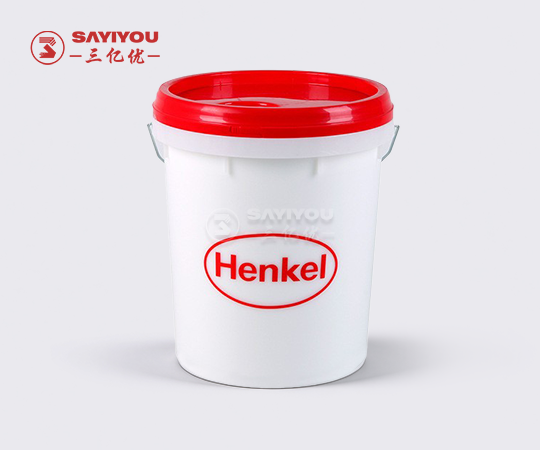
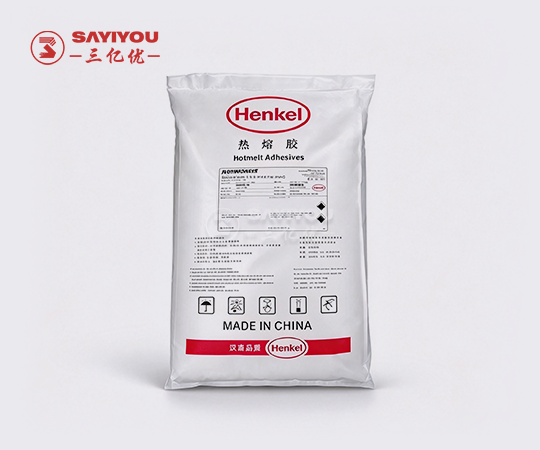
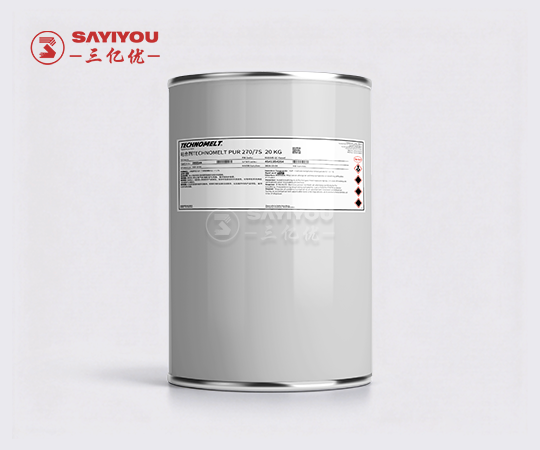
The Tianjin Sanyiyou New Material Technology Co., Ltd. is a licensed Henkel distributor and also makes its own products. It sells furniture, cabinets, flooring, and door and window plants all over the world. Sanyiyou, as a Henkel partner, sells real AQUENCE KL 3366 wood assembly adhesive. It is a white emulsion with a Brookfield viscosity of 17,000 to 20,000 cps, a solid content of 45% to 49%, and a pH of 3.0 to 4.0. It comes in 20 kg barrels. The product is classified as EN 204/205 D2 and D3 according to the ISO 9001 (2015) quality system. It has no free formaldehyde and no solvents. Sanyiyou also has its own research and development (R&D) lab that works on PUR hot-melt, water-based woodworking adhesives, UV-curing materials, and wood primers. This lab helps with OEM and ODM projects by changing the formula and packaging the products under a company's own name. Orders in stock usually ship in two to five days. Custom OEM formulas, on the other hand, take twelve to thirty business days, depending on how complicated they are.
Use-Case Scenarios for Procurement Decisions
There are three types of buyers who usually ask for samples, and each one gives the above list a different amount of weight.
- OEM furniture manufacturer needs stable viscosity, fast curing, compatibility with automated dispensing, and quality that stays the same from batch to batch over long production runs.
- A distributor or hardware store needs stable shelf life, clear multilingual documentation, reliable packaging, and the option to resell under their own brand name in their own region.
- Mid-size woodworking plant: needs help with safe storage, practical application, and a supplier that can respond quickly when an urgent order runs out in the middle of the week.
Conclusion
The type of wood, the design of the joint, and the environment the finished piece will be in all play a role in choosing the right wood assembly adhesive. Most indoor furniture, doors, and flooring jobs can be done with PVA systems like AQUENCE KL 3366. Polyurethane or epoxy systems may work better for jobs with a lot of moisture or mixed substrates. Before approving an adhesive for use in production, compare the clamp time, water-resistance classification, technical data sheet, and safety documentation to how things work in your shop. The most reliable way to be sure that a glue is ready for full production is to do a short test run with real wood, real equipment, and real line temperature.
FAQ
What is wood assembly adhesive?
Solid wood, engineered wood, veneers, and panels are joined during production using a bonding product called wood assembly adhesive. Chemicals like PVA, polyurethane, epoxy, and hybrid reactive systems are used a lot.
What is the best adhesive for wood assembly?
Which one is best depends on the type of wood, the design of the joint, whether it will be exposed to air inside or outside, and how quickly the wood needs to cure. Most indoor furniture can be painted with PVA. Polyurethane or epoxy may be better for jobs that need to be waterproof or have a mix of substrates.
How long does wood assembly adhesive take to cure?
How long something takes to cure depends on its chemistry, temperature, humidity, wood moisture, and clamp pressure. Read the technical data sheet carefully to find out the open time, clamp time, and full cure times. They are not the same number.
Is wood assembly adhesive waterproof?
"Waterproof" needs a test method to back it up, but some formulas are water-resistant up to a certain class. EN 204 D1 through D4 classifications cover this for many European uses of wood glue, such as AQUENCE's D2 and D3 grades.
Can wood assembly adhesive be used for outdoor woodworking?
Some polyurethane and reactive systems work better than standard PVA when used outside or in wet conditions. There are still things like joint design, wood movement, and surface coating that can change how long an outdoor bond lasts.
How should manufacturers compare wood adhesive suppliers?
Put side by side verified technical data, batch traceability, certifications, minimum order quantity, and lead time to see which ones are better. Before you place an order, the best way to make sure everything is okay is to do a test run with your own wood and tools.
Ready to Test a Sample on Your Production Line?
When wood assembly adhesive is slow or inconsistent, it causes work to be redone, which takes up labor hours that are hard for the factory to get back later in the shift. As a licensed Henkel distributor and supplier of wood assembly adhesive, Sanyiyou can send you samples of AQUENCE KL 3366 along with its full technical data sheet so that you can test it in your own shop. Send an email to sales@sayiyousolutions.com with the type of wood, joint, and current clamp time of your line. Our technical team will get back to you with a suggestion that will work for you.
References
1. EN 204 (2001) — Classification of thermoplastic wood adhesives for non-structural applications, European Committee for Standardization.
2. EN 205 (2016) — Adhesives, wood adhesives for non-structural applications, determination of tensile shear strength of lap joints, European Committee for Standardization.
3. ASTM D5751 (2011) — Standard Specification for Adhesives Used for Finger Joints in Nonstructural Lumber Products, ASTM International.
4. ISO 9001 (2015) — Quality management systems requirements, International Organization for Standardization.
5. European Chemicals Agency (2023) — REACH Regulation: Understanding REACH, ECHA.
6. U.S. Occupational Safety and Health Administration (2024) — Hazard Communication Standard, OSHA.
About the Author
YANG serves as Technical Manager at Tianjin Sanyiyou New Material Technology Co., Ltd., an authorized Henkel distributor and adhesive formulator. With over a decade spent on furniture and joinery production floors across China and Southeast Asia, YANG works directly with plant teams on adhesive selection, line trials, and OEM formula adjustment for water-based and PUR wood bonding systems.
you may like