PVA White Wood Glue: Uses, Benefits, and Key Features
PVA white wood glue is made of polyvinyl acetate polymer. It's a glue that works with water. It goes under the surface of porous things like wood, plywood, MDF, paper, and more, and then it dries into a clear film. How does PVA white wood glue work? Where does it work best? How does it compare to epoxy and yellow glue? What should buyers look for before placing an order? There are real test standards, rules for storage, safety notes, and a short case study from a hardware distributor that switched to private-label packaging. Read this short summary first, and then click on any link to read more.
What Is PVA White Wood Glue?
Before you compare brands or prices, it's helpful to know what this glue is and how strong it is.
PVA White Wood Glue Definition and Chemical Makeup
This is what PVA white wood glue means. It is a man-made polymer and is sold as a milky mixture with water. The most common blend contains water, polymer solids, a preservative, a small quantity of plasticiser, and sometimes a defoamer to keep the mould from bubbling over when it is filled. The solids content is typically in the range of 40-55%. The viscosity vary a lot depending on what it will be used for, from extremely thin craft glue to very thick glue to bind wood together. Technical data sheets can tell glue buyers the polymer type, percent solids, viscosity range, pH, density, open time and ideal temperature range for storage. These statistics inform the glue how to run on a production line.
What PVA White Wood Glue Can and Cannot Bond
Strong wood, plywood, MDF, particle board, paper, and cardboard are the best things to use this glue on because they are porous and soak up water. It doesn't stick very well to metal, glass, polyethylene, polypropylene, silicone, or any surface that is oily, waxy, or dusty. How quickly they dry, how well they fill in gaps, and whether they are crosslinking PVA, epoxy, polyurethane, or white PVA glue are the things that matter. Test the glue on both sides if someone wants to glue painted MDF to solid pine. They shouldn't just believe what it says on the package.
Common Product Types and Grades
Many companies sell different types of paint. Some offer craft grades that can be used for many different tasks, assembly grades that dry quickly, high-solids industrial grades for automated lines, and low-odor interior formulas. Some lines have ratings for being waterproof so they can be used inside and outside. Standard interior grades are cheaper and work well for furniture and cabinets. Wholesalers and original equipment manufacturers (OEMs) can usually ask for any of these grades to be packed in their own brand names. This means that a distributor doesn't have to pay for a new chemical development project to sell a standard formula for glue under its own brand name.
What Are the Key Features of PVA White Wood Glue?
The PVA white wood glue price is usually the first thing buyers look at when they compare suppliers. But the following things show if a batch always does things the same way.
Core Performance Features
What is the difference between an excellent glue and one that has to be repaired on the production floor?”
- "High initial tack with steady final strength" is the most critical thing for multi-step production, where a panel goes from one station to another before it is entirely fastened. A glue with a poor initial hold lets parts move out of alignment, wasting time and making busy lines busier. Production partners working with Sanyiyou in 2024 reported higher initial tack cut clamp time by around 15% on edge-banding and flat lamination processes.
- The same recipe can be used in a small workshop or a big production line, and it is easy to apply using a brush, roller, nozzle or automated bead system. Having two different adhesives on hand is expensive and training new operators takes time, but one solution that works with all three saves money and time.
- Workers are more comfortable and don't have to wait as long between shifts to clean up using water instead of solvent wipes and pauses for ventilation. Or you can use a water-based PVA compound that will wash from tools and skin with ordinary water before it sets. This is particularly critical in tiny workshops without powerful extraction systems. Fumes build up quickly in tight areas.
For these three reasons PVA white wood glue is still utilised in furniture factories, cabinet shops and packing lines for joining together porous materials.
Technical Specification Checklist
Check out the full technical sheet from the supplier before giving the go-ahead for a sample. The table below shows what each number does on the factory floor.
| Specification | Why It Matters | Example Information to Request |
|---|---|---|
| Viscosity | Controls flow, spread, and machine application | Brookfield method, spindle, temperature, cP range |
| Solids content | Affects film formation and coverage | Percentage by weight |
| Open time | Sets the assembly window | Minutes at a defined temperature and humidity |
| Set time | Shows when parts can be handled | Minutes under stated conditions |
| Full cure time | Supports production scheduling | Hours under stated conditions |
| pH | Affects compatibility and handling | Measured method and range |
| Shelf life | Supports inventory planning | Months from manufacture date |
| Water resistance | Decides interior or exterior suitability | EN 204, ASTM, or internal classification |
Fast-Drying, Low-Odor, and Zero-Formaldehyde Claims
It's not enough for labels to say "low-VOC," "non-toxic," or "zero formaldehyde." They should back up what they say. When someone says that PVA white wood glue has zero formaldehyde, they usually mean that the base polymer doesn't give off formaldehyde. This happens more often with PVA glues than with urea-formaldehyde glues. If someone is selling something in the EU, US, or GCC, they shouldn't just take the phrase at face value. Instead, they should ask for a current safety data sheet and a test report that is specific to the product.
Why Does PVA White Wood Glue Work So Well on Wood?
If that person knows why the bond forms, they can figure out why a joint fails.
How the Bonding Process Happens
The process has four steps. First, the glue covers the wood's surface and wets the fibers. Second, some of the glue gets into the surface cracks and holes. This third part is about water moving into or out of the wood. This depends on how humid it is and how much water is in the wood. Polymer particles stick together to form a single film in the fourth step. This film grips the wood grain and forms a bond at the surface level.
Wood Porosity and Surface Preparation
Generally PVA white wood glue holds better to wood that has an exposed grain than wood that has been sealed or polished. This is because glue needs to attach to something. Before you apply glue, the joint faces must be clean, dry, flat and free from wax, oil, dust and loose fibres. End grain glue will suck up glue fast thus you may need to put on a second light coat so the joint doesn't have to struggle for food. The technical sheet shows the range of water that should be in the wood. The glue takes longer to set if the wood is too damp or too dry.
Application Factors That Change Bond Quality
Time it takes to put the parts together before clamping, the clamp pressure, and the spread rate all have an effect on the final bond. Some types of glue lines break more quickly than others. Stable joints that cover the whole joint tend to last longer. If the temperature is less than the lowest point on the data sheet where a film can be formed, the glue might not be able to form a film at all. It's because of this that joints often get weak during winter production runs.
What Are the Main Uses of PVA White Wood Glue?
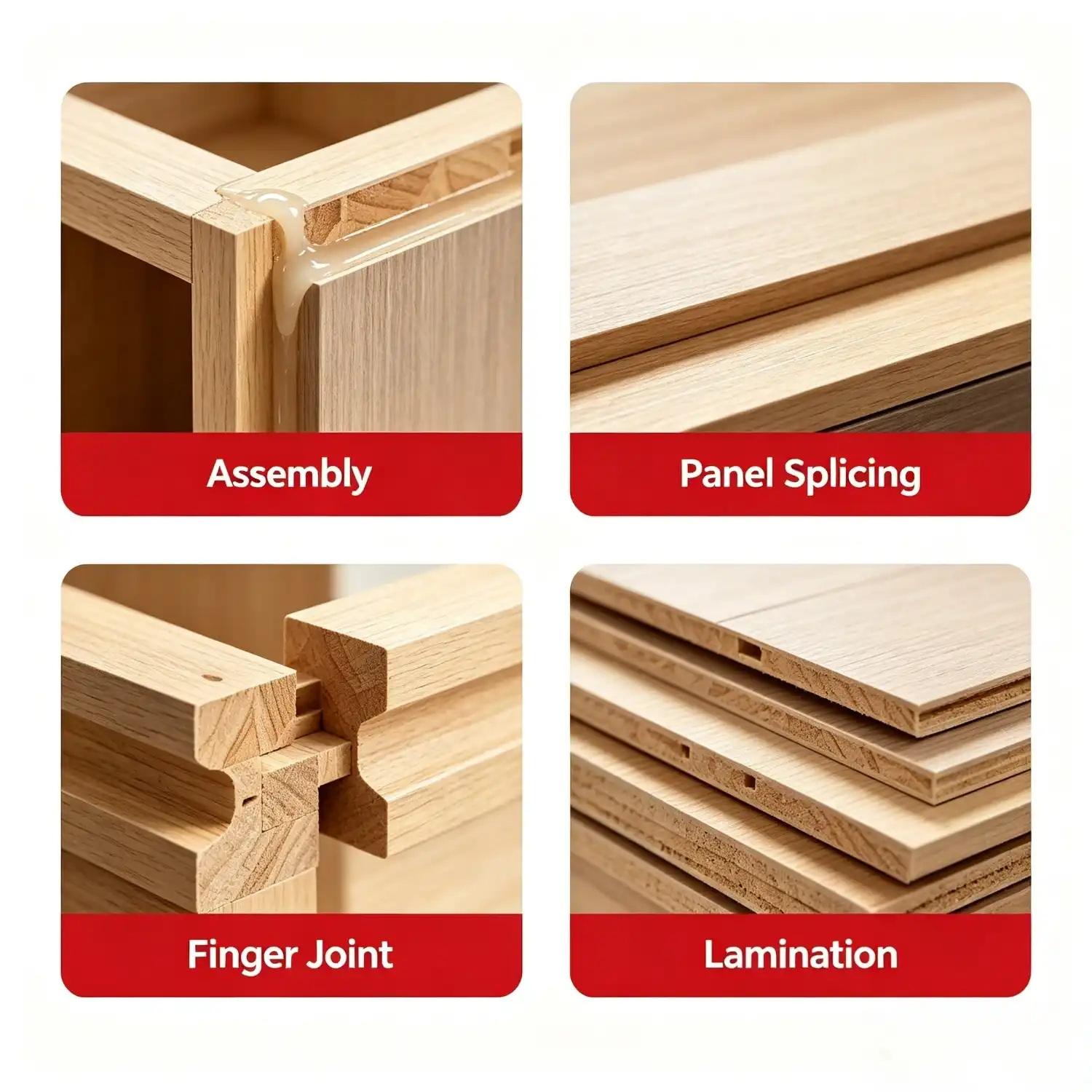
People can buy this glue in more places than they think, from small repair shops to factories that make furniture.
Furniture, Carpentry, and Cabinet Assembly
People who make furniture use PVA white wood glue to put together dowel joints, mortise-and-tenon joints, edge bonding on plywood, and laminating MDF and particle board panels. Small carpentry shops use it to fix things like drawers and make custom joinery, and cabinet shops use it to put together face frames and trim. People who put down floors also use certain grades to put tongue-and-groove boards together before they are fully attached.
Paper, Packaging, and Craft Applications
The same chemistry is used to bind books, put together cartons, turn paperboard into something else, and work with wood. This is because both paper and cardboard are made of cellulose, which is a porous material. PVA glues are safer for people to use than solvent-based glues, which is why craft and school supply companies choose them. These glues are better for your skin because they are water-based.
Case Study: A Hardware Distributor's Private-Label Switch
In 2024, Sanyiyou found a Southeast Asian hardware distributor who sold wood glue that wasn't a brand name to about 600 hardware stores. Too few batches were sent by a cheap supplier, and they didn't always work with each other. During the rainy season, claims went up by about 8%. After switching to private-label packaging with batch-coded bottles and a fixed viscosity range of 12,000 to 15,000 cP, the number of return claims dropped to about 2% in just two reorder cycles. The distributor gave our team their own tracking information, which we used to make this decision. The distributor could raise the price by about 10% without taking away shelf space from other items because the boxes were brand-named.
Three Buyer Scenarios: OEM Factory, Distributor, Workshop
A factory that makes OEM furniture usually needs stable viscosity between batches, the option to not use automated lines, and inspection reports before sending out a full container. A wholesaler or importer needs labels that are ready to go on the market, SDS and TDS paperwork, boxes that are ready to use barcodes, and clear terms for MOQ and lead time for each SKU. There should be a package size that can be used every day, a cure time that works for them, and water that is easy to clean up at the end of the day.
How Strong Is the Bond of PVA White Wood Glue?
It doesn't mean much to say something is strong if you can't test it.
What Actually Determines Bond Strength
Most of the time for PVA white wood glue, a joint that fits well and is tight is better than one that needs extra glue to fill in gaps. Because PVA formulas aren't made to fill in gaps, this is the case. How strong the bond is in the end depends on more than just the glue. The surface prep, clamp pressure, cure time, moisture level, and room temperature are also important. A spec sheet might not show the best item, but it might not be the best choice if its viscosity or open time doesn't work with the way things are made.
Test Standards Worth Requesting
One thing that buyers can ask for is ASTM D5572, which checks the shear strength of adhesives used in finger joints for nonstructural lumber, and ASTM D905, which checks the shear strength of adhesive bonds that are compressed. The European Committee for Standardization (2023) says that thermoplastic wood adhesives for non-structural use are put into groups based on how well they resist water. The classes go from D1 (for dry use inside) to D4 (for more moisture exposure). Someone you can trust more is one who can show you test reports that match one of these standards than someone who can only make marketing claims.
Quality Verification and Batch Traceability
They should give you a certificate of analysis, a batch or lot number, samples to keep, and dates of production and expiration if you ask. These records are most important for wholesale buyers who want to sell the goods under their own brand. This is because if a store later on complains about quality, they need to be able to point to a specific batch, not just a guess.
White Glue vs Yellow Glue: What Is the Difference?
People who buy your PVA white wood glue goods often tell you to add epoxy or switch from white glue to yellow glue. To sum up, it depends on the job.
PVA White Glue vs Yellow Wood Glue
| Criteria | PVA White Wood Glue | Yellow Wood Glue |
|---|---|---|
| Appearance when wet | White, dries clear or translucent | Yellow or amber |
| Main use | Wood, paper, cardboard, crafts | Woodworking and joinery |
| Drying speed | Moderate, formula-dependent | Often faster initial grab |
| Water resistance | Usually water-resistant only | Often available in higher grades |
| Visibility in gaps | Less visible after drying | Color may remain visible |
You can glue cheap, clean, porous things together with white glue and barely see the line where you glued them. Yellow glue is the best choice for shops that need to work with the same line faster or better when it comes to water.
PVA White Glue vs Epoxy and Polyurethane
| Criteria | PVA White Glue | Epoxy | Polyurethane Glue |
|---|---|---|---|
| Components | One-component | Usually two-component | One-component or reactive |
| Gap filling | Limited | Strong | Moderate to good |
| Moisture resistance | Formula-dependent | Generally high after cure | Often high after cure |
| Cleanup | Water before cure | Solvent or mechanical methods | Harder after cure |
PVA can't fill in gaps or join different kinds of materials together, but epoxy can. As long as the formula has been tested and approved for that use, polyurethane works well for joints that get wet. PVA white wood glue is still the best choice for everyday porous joints because it is cheap and easy to clean.
Is PVA White Wood Glue Safe and Non-Toxic?
People who want to buy things for homes, schools, and furniture stores often ask about safety.
Odor, VOC, and Exposure Facts
Wood glues that are based on solvents usually smell worse and have more solvents than PVA glues that are based on water. This is necessary to keep the air quality inside the building clean while furniture is being made. In the EU, the US, and other markets, "non-toxic" means different things when it comes to the law. So, a claim that something is safe should be backed up by the safety data sheet and the formulation data, not just a marketing phrase. Read the label to find out how to deal with both dry glue film and liquid glue that is still wet. This includes how to let air flow and clean up any mess.
Documents Buyers Should Request
People who want to buy something in the EU (European Chemicals Agency, 2023) should ask for a safety data sheet that follows MRL rules. If you are in the US (Occupational Safety and Health Administration, 2023), make sure the one you buy meets the OSHA Hazard Communication Standard. Instead of assuming that any wood glue will work if the application is going to come into contact with food, you should ask for proof under 21 CFR 175.105 (U.S. FDA (2023). Not all of these marks are used on all wood glue, so the company that sells the glue should make sure that the right one is used on it and in stores.
How Does PVA White Wood Glue Perform on Different Wood Species?
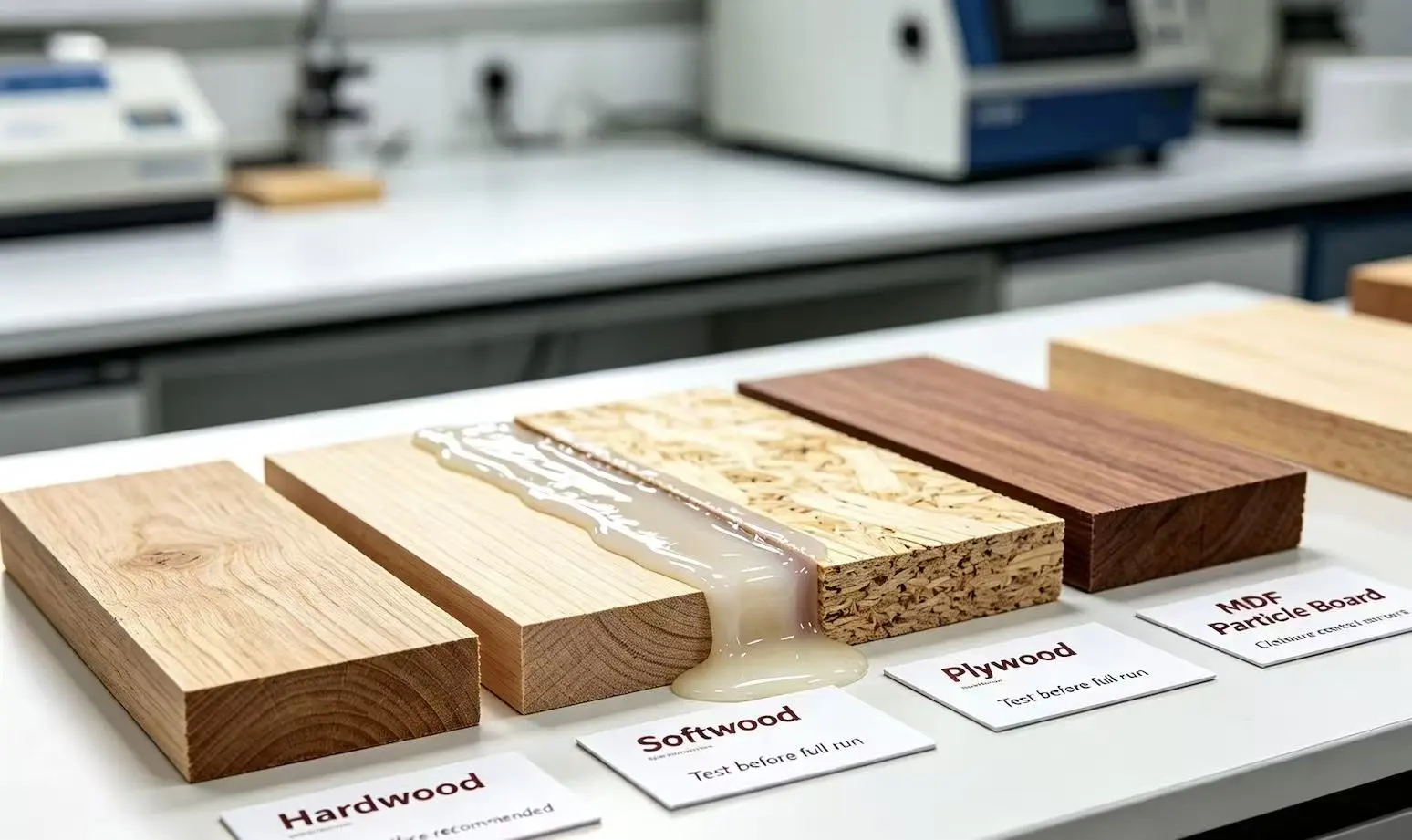
Many times, warranty claims are made without first testing the glue on a different kind of wood. This is because glue doesn't work the same way on all types of wood.
Softwood, Hardwood, Plywood, and Engineered Board
PVA white wood glue works well on most types of hardwood and softwood as long as it is clamped and kept at the right moisture level. The amount of glue that two pieces of plywood or MDF soak up will depend on the quality of the veneer on the face and how dense the board is. The glue needs to be spread carefully because the edges of particle board might not be as strong as the flat face. Also, a thin edge joint might need more clamp time to stay in place.
Dense or Oily Wood Needs Extra Testing
If you don't sand or clean the surface first, wet materials won't stick to dense hardwoods like teak or oily woods like rosewood. The bond is less strong now. If you paint or reclaim wood, it often has old finish, wax, or dust on it that makes it impossible to glue until you clean it first. Instead of a lab sample for the quick hand test, it is better to use the production surface for the small test batch.
What Are the Limitations of PVA White Wood Glue?
People should know right away what an adhesive can and can't do so they don't have to deal with a lot of returns later on.
Water Resistance Is Not Waterproofing
Standard PVA white wood glue can handle light contact with water, but not being wet all the time, being in the rain, or being used in the ocean. Though the label may say "strong" or "premium," that doesn't mean the formula can be used outside or in a wet room. People who want to buy outdoor furniture or flooring for places that get a lot of rain should ask for a water-resistance class under EN 204 or a similar test result before they place their order.
Common Failure Modes and Fixes
These problems, along with an easy fix, are the cause of most complaints from the field.
| Failure Mode | Likely Cause | Fix |
|---|---|---|
| Weak joint | Poor fit, contamination, low pressure | Improve prep and clamping |
| Slow drying | Low temperature, high humidity, thick layer | Control room conditions and spread rate |
| Bond failure on oily wood | Poor wetting, surface contamination | Clean, sand, and test before a full run |
| Brittle or poor film | Frozen, aged, or poorly stored glue | Check storage history and batch records |
A lot of these issues are brought on by the way the glue is kept, the surface being ready, or the speed at which it spreads. Because of this, it's just as important to have clear instructions and batch records as it is to have the formula.
How Should PVA White Wood Glue Be Stored and Sourced?
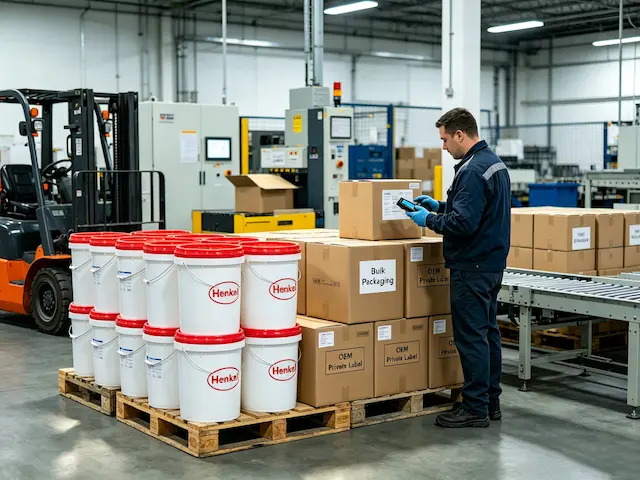
It's not just the chemistry inside the bottle that changes how long it lasts, how often it's claimed, and how likely people are to order it again. It also matters where the product is stored and where it comes from.
Storage Conditions and Shelf Life
Labels for PVA white wood glue tell you how to store containers safely. Keep them closed and out of direct sunlight, very cold places, and places with a lot of heat. If you store them right, most formulas will last between 6 and 12 months. Some grades with a lot of solids can last up to 24 months. You shouldn't put a batch on a live order that has skin formation, an off smell, or a change in thickness before you use it. Instead, you should compare it to its retention sample.
Packaging and Export Logistics for Wholesale Buyers
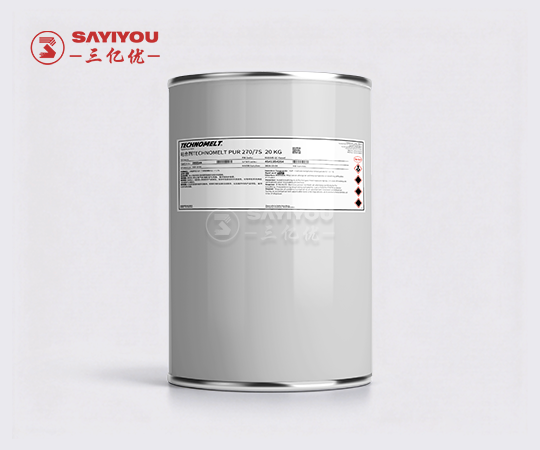
Big-box stores that sell a lot of hardware usually care about the different kinds of pails, bottles, and drums, as well as the private label artwork, the barcode format for cartons, and how to load a pallet for a full container. People who live in colder places need freeze protection during winter shipping because a batch that has been frozen and then thawed can separate and stop working together. Before you place your first order, make sure you know the MOQ per SKU, the production lead time, and the Incoterms. This will help you avoid a slow first shipment that slows down the store rollout.
How to Evaluate a Supplier Before Price
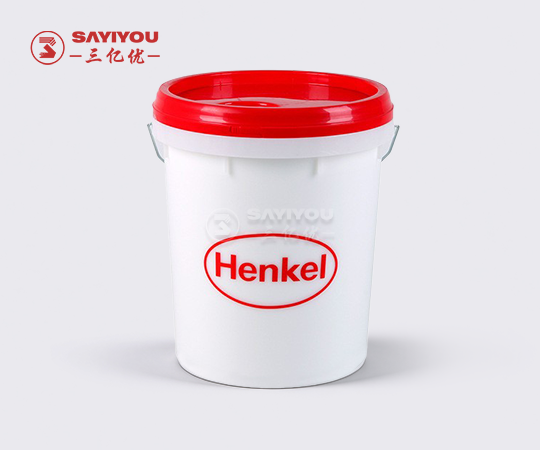
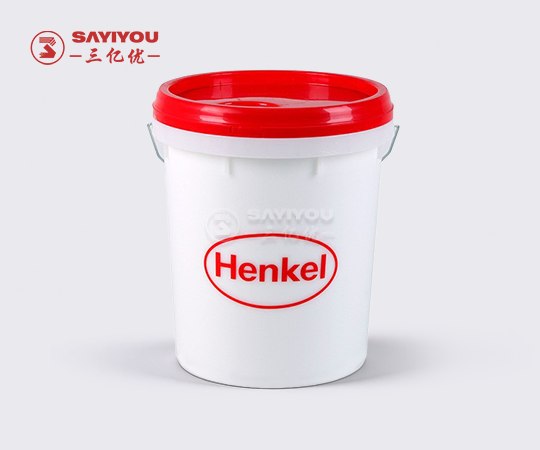
There is more to a supplier's record of batch consistency than price. This is because cheap glue that changes from batch to batch costs a lot more to return than it saves. Ask to see a sample from the current stock, not a sample batch made in the lab. Also, ask to see the analysis certificate for that lot. In this case, Sanyiyou sells its own brand of wood glue through a channel that is officially run by Henkel. People can then compare a private-label PVA option to a well-known international brand and pick the one that fits their budget and market level the best. If a supplier is willing to share production data, test reports, and an easy way for customers to make complaints, them and the distributor are more likely to work together.
Conclusion
You can still use PVA white wood glue to join pieces of furniture, cabinets, flooring, paper, and packaging that need to stay together even though they are porous. It's more important to match the fastest strength number on the spec sheet to the job's water resistance, open time, viscosity, and cure profile. Make sure that each batch is the same, that the products are packed under their own brand, and that the paperwork is clear for wholesale and OEM buyers. This will turn a one-time order into a regular one. Look at more than just prices when you compare suppliers. Check out test results and how they can be tracked.
FAQ
What is PVA white wood glue?
PVA white wood glue is a polyvinyl acetate glue that is water-based and is mostly used to join porous materials together, like cardboard, paper, wood, plywood, and MDF. As the water leaves the formula, this turns into a film that you can stretch.
Is PVA white wood glue waterproof?
No, most standard PVA formulas can handle a little water, but not being left outside or getting wet all the time. People who want to buy something that will work in wet conditions or outside should look for a water-resistance class under EN 204 or a similar test.
How long does PVA white wood glue take to dry?
The first set usually happens in 20 to 60 minutes, and the full cure takes about 24 hours. How thick the glue is, how hot or cold it is, and how tightly the joint is clamped all affect the real time.
Is PVA white wood glue stronger than yellow glue?
In every situation, neither type wins. It's more likely that yellow glue will dry faster and keep water out. On the other hand, white PVA glue is less expensive and works well on joints that are porous and fit together well.
Can PVA white wood glue be used on MDF and plywood?
Yes. The glue should spread well, and the clamp time should be checked for the board that is being used. The surface should be clean.
What should a wholesale buyer ask a PVA glue supplier before ordering?
Find out about the product's technical and safety data sheets, its shelf life, different packaging options, a minimum order quantity (MOQ), and the lead time. The price per unit doesn't tell us as much about how good these answers are on its own.
Can PVA white wood glue be private labeled?
Yes. Most standard PVA formulas can be used to make private-label packaging, like bottles, pails, or drums with custom artwork on them. You don't need a new chemical formula for this.
Ready to Compare Samples or Request a Private-Label Quote
The people who make furniture, run hardware stores, and do installations all go to Sanyiyou when they need stable, well-documented PVA white wood glue in bulk or as an OEM. Our lab checks to make sure that the viscosity, open time, and packaging are all good for your factory. We can also help with export paperwork and private label art. Send an email to sales@sayiyousolutions.com with your substrate, the people you want to reach, and how much work you do each year. They will give you a lead time, a data sheet, and sample options when they get back to you. Folks who want to find a new PVA white wood glue provider can first ask for a side-by-side sample trial.
References
1. ASTM International. 2024. "ASTM D905-08(2021): Standard Test Method for Strength Properties of Adhesive Bonds in Shear by Compression Loading."
2. ASTM International. 2024. "ASTM D5572-05(2019): Standard Specification for Adhesives Used for Finger Joints in Nonstructural Lumber Products."
3. European Committee for Standardization (CEN). 2023. "EN 204: Classification of Thermoplastic Wood Adhesives for Non-Structural Applications."
4. European Chemicals Agency. 2023. "Understanding REACH."
5. Occupational Safety and Health Administration. 2023. "Hazard Communication Standard, 29 CFR 1910.1200."
6. U.S. Food and Drug Administration. 2023. "21 CFR 175.105 Adhesives."
About the Author
Yang is the Technical Manager at Sanyiyou. In this role, he helps look over formulations, test OEM samples, and make sure that water-based wood adhesives and new materials are of good quality. As an expert in glues, he has worked with flooring, furniture, and edge-banding, making sure that every batch is the same and packing goods to send to factories and distributors in South America, Southeast Asia, and the Middle East.
you may like